


Your cart is currently empty!
/
𝐇𝐈𝐊𝐈𝐍𝐆 𝐕𝐒 𝐓𝐑𝐄𝐊𝐊𝐈𝐍𝐆 𝐕𝐒 𝐌𝐎𝐔𝐍𝐓𝐀𝐈𝐍𝐄𝐄𝐑𝐈𝐍𝐆: 𝑼𝒏𝒅𝒆𝒓𝒔𝒕𝒂𝒏𝒅𝒊𝒏𝒈 𝒕𝒉𝒆 𝑫𝒊𝒇𝒇𝒆𝒓𝒆𝒏𝒄𝒆 𝑩𝒆𝒇𝒐𝒓𝒆 𝒀𝒐𝒖𝒓 𝑵𝒆𝒙𝒕 𝑨𝒅𝒗𝒆𝒏𝒕𝒖𝒓𝒆
𝐇𝐈𝐊𝐈𝐍𝐆 𝐕𝐒 𝐓𝐑𝐄𝐊𝐊𝐈𝐍𝐆 𝐕𝐒 𝐌𝐎𝐔𝐍𝐓𝐀𝐈𝐍𝐄𝐄𝐑𝐈𝐍𝐆: 𝑼𝒏𝒅𝒆𝒓𝒔𝒕𝒂𝒏𝒅𝒊𝒏𝒈 𝒕𝒉𝒆 𝑫𝒊𝒇𝒇𝒆𝒓𝒆𝒏𝒄𝒆 𝑩𝒆𝒇𝒐𝒓𝒆 𝒀𝒐𝒖𝒓 𝑵𝒆𝒙𝒕 𝑨𝒅𝒗𝒆𝒏𝒕𝒖𝒓𝒆
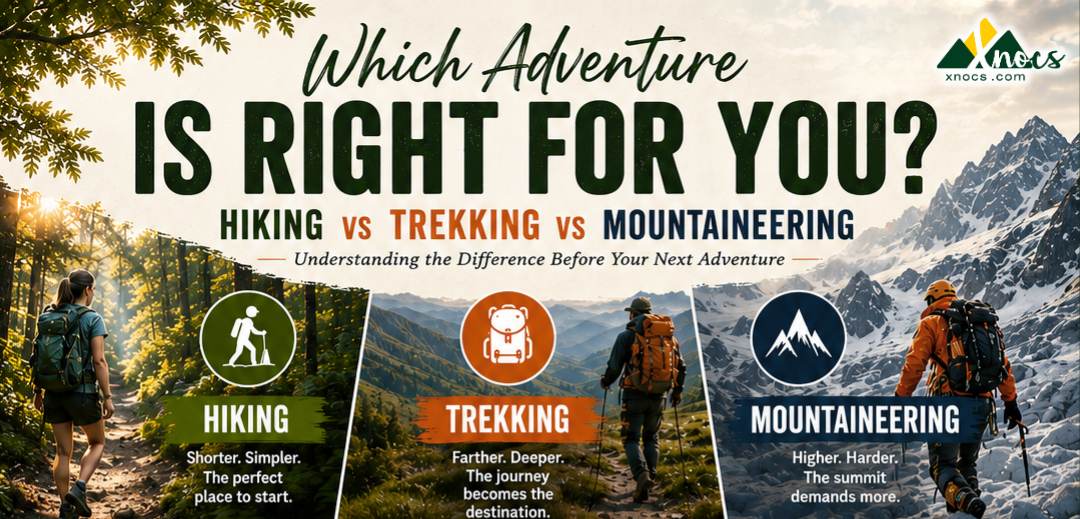
In the outdoor world, the words ℎ𝑖𝑘𝑖𝑛𝑔, 𝑡𝑟𝑒𝑘𝑘𝑖𝑛𝑔, 𝑎𝑛𝑑 𝑚𝑜𝑢𝑛𝑡𝑎𝑖𝑛𝑒𝑒𝑟𝑖𝑛𝑔 are often used interchangeably. Yet each represents a very different kind of adventure — not just in terrain you’ll encounter, but also in the preparation, commitment, and experience required.
At 𝐗𝐍𝐎𝐂𝐒, we believe every outdoor journey begins with understanding where you are today and where you want to go tomorrow. Whether you’re urban forest, embarking on a multi-day trek, or dreaming of standing on a mountain summit, knowing the difference helps you prepare wisely and enjoy every step of the journey.
Let’s explore what sets them apart.
𝑯𝒊𝒌𝒊𝒏𝒈: 𝑻𝒉𝒆 𝑮𝒂𝒕𝒆𝒘𝒂𝒚 𝒕𝒐 𝒕𝒉𝒆 𝑶𝒖𝒕𝒅𝒐𝒐𝒓𝒔
Hiking is often where most outdoor journeys begin. It involves 𝑤𝑎𝑙𝑘𝑖𝑛𝑔 𝑜𝑛 𝑒𝑠𝑡𝑎𝑏𝑙𝑖𝑠ℎ𝑒𝑑 𝑡𝑟𝑎𝑖𝑙𝑠, and is usually 𝑐𝑜𝑚𝑝𝑙𝑒𝑡𝑒𝑑 𝑤𝑖𝑡ℎ𝑖𝑛 𝑎 𝑓𝑒𝑤 ℎ𝑜𝑢𝑟𝑠 𝑜𝑟 𝑎 𝑠𝑖𝑛𝑔𝑙𝑒 𝑑𝑎𝑦.
From urban forests and nature reserves to hill parks and national parks, hiking trails are found almost everywhere, making hiking one of the most accessible outdoor activities.
The beauty of hiking lies in its simplicity. You don’t need specialised skills or expensive equipment to get started. A comfortable pair of trail shoes, sufficient water, and a sense of adventure are often all you need.
More importantly, hiking builds the 𝑓𝑜𝑢𝑛𝑑𝑎𝑡𝑖𝑜𝑛 𝑓𝑜𝑟 𝑓𝑢𝑡𝑢𝑟𝑒 𝑎𝑑𝑣𝑒𝑛𝑡𝑢𝑟𝑒𝑠 𝑏𝑦 𝑖𝑚𝑝𝑟𝑜𝑣𝑖𝑛𝑔 𝑓𝑖𝑡𝑛𝑒𝑠𝑠, 𝑐𝑜𝑛𝑓𝑖𝑑𝑒𝑛𝑐𝑒, 𝑎𝑛𝑑 𝑜𝑢𝑟 𝑎𝑝𝑝𝑟𝑒𝑐𝑖𝑎𝑡𝑖𝑜𝑛 𝑜𝑓 𝑛𝑎𝑡𝑢𝑟𝑒.
𝑇𝑦𝑝𝑖𝑐𝑎𝑙 𝑐ℎ𝑎𝑟𝑎𝑐𝑡𝑒𝑟𝑖𝑠𝑡𝑖𝑐𝑠 𝑜𝑓 ℎ𝑖𝑘𝑖𝑛𝑔:
• Short to moderate duration (2–8 hours)
• Clearly marked trails
• Minimal technical difficulty
• Beginner-friendly and social
Hiking reminds us that adventure doesn’t always have to be extreme. Sometimes it simply begins with taking the first step outside.
𝑻𝒓𝒆𝒌𝒌𝒊𝒏𝒈: 𝑻𝒉𝒆 𝑱𝒐𝒖𝒓𝒏𝒆𝒚 𝑩𝒆𝒚𝒐𝒏𝒅 𝒕𝒉𝒆 𝑻𝒓𝒂𝒊𝒍
If hiking introduces us to the outdoors, trekking invites us to immerse ourselves in it.
Unlike hiking, trekking usually involves 𝑚𝑢𝑙𝑡𝑖-𝑑𝑎𝑦 𝑗𝑜𝑢𝑟𝑛𝑒𝑦𝑠 𝑎𝑐𝑟𝑜𝑠𝑠 𝑣𝑎𝑟𝑖𝑒𝑑 𝑙𝑎𝑛𝑑𝑠𝑐𝑎𝑝𝑒𝑠, often through remote environments where self-sufficiency becomes part of the experience.
Trekkers may travel through forests, mountain passes, valleys, and villages over several days. Because of the longer duration, trekking 𝑟𝑒𝑞𝑢𝑖𝑟𝑒𝑠 𝑔𝑟𝑒𝑎𝑡𝑒𝑟 𝑒𝑛𝑑𝑢𝑟𝑎𝑛𝑐𝑒, 𝑐𝑎𝑟𝑒𝑓𝑢𝑙 𝑝𝑙𝑎𝑛𝑛𝑖𝑛𝑔, 𝑎𝑛𝑑 𝑡ℎ𝑜𝑢𝑔ℎ𝑡𝑓𝑢𝑙 𝑝𝑟𝑒𝑝𝑎𝑟𝑎𝑡𝑖𝑜𝑛.
The destination is important—but the journey itself becomes equally rewarding. Every sunrise, every campsite, and every changing landscape becomes part of the adventure.
𝑇𝑦𝑝𝑖𝑐𝑎𝑙 𝑐ℎ𝑎𝑟𝑎𝑐𝑡𝑒𝑟𝑖𝑠𝑡𝑖𝑐𝑠 𝑜𝑓 𝑡𝑟𝑒𝑘𝑘𝑖𝑛𝑔:
• Multi-day adventures
• Mixed terrain and longer distances
• Requires greater physical endurance
• Often includes overnight stays or camping
Trekking invited us to slow down, carry only what we need, and appreciate the journey as much as the destination.
𝑴𝒐𝒖𝒏𝒕𝒂𝒊𝒏𝒆𝒆𝒓𝒊𝒏𝒈: 𝑻𝒉𝒆 𝑷𝒖𝒓𝒔𝒖𝒊𝒕 𝒐𝒇 𝒕𝒉𝒆 𝑺𝒖𝒎𝒎𝒊𝒕
Mountaineering is the most demanding form of mountain adventure. Its goal is to reach mountain summits, often in ℎ𝑖𝑔ℎ-𝑎𝑙𝑡𝑖𝑡𝑢𝑑𝑒 𝑒𝑛𝑣𝑖𝑟𝑜𝑛𝑚𝑒𝑛𝑡𝑠 𝑤ℎ𝑒𝑟𝑒 𝑡𝑒𝑐ℎ𝑛𝑖𝑐𝑎𝑙 𝑐𝑙𝑖𝑚𝑏𝑖𝑛𝑔 𝑠𝑘𝑖𝑙𝑙𝑠 𝑏𝑒𝑐𝑜𝑚𝑒 𝑒𝑠𝑠𝑒𝑛𝑡𝑖𝑎𝑙.
Unlike hiking or trekking, mountaineering 𝑟𝑒𝑞𝑢𝑖𝑟𝑒𝑠 𝑠𝑝𝑒𝑐𝑖𝑎𝑙𝑖𝑠𝑒𝑑 𝑡𝑟𝑎𝑖𝑛𝑖𝑛𝑔, 𝑒𝑞𝑢𝑖𝑝𝑚𝑒𝑛𝑡, 𝑎𝑛𝑑 𝑒𝑥𝑝𝑒𝑟𝑖𝑒𝑛𝑐𝑒. Climbers may need to navigate glaciers, steep rock faces, snow slopes, and exposed terrain using ropes, helmets, crampons, harnesses, and ice axes.
Because 𝑚𝑜𝑢𝑛𝑡𝑎𝑖𝑛 𝑐𝑜𝑛𝑑𝑖𝑡𝑖𝑜𝑛𝑠 𝑐𝑎𝑛 𝑐ℎ𝑎𝑛𝑔𝑒 𝑟𝑎𝑝𝑖𝑑𝑙𝑦, 𝑠𝑢𝑐𝑐𝑒𝑠𝑠𝑓𝑢𝑙 𝑚𝑜𝑢𝑛𝑡𝑎𝑖𝑛𝑒𝑒𝑟𝑖𝑛𝑔 𝑑𝑒𝑝𝑒𝑛𝑑𝑠 𝑜𝑛 𝑝𝑟𝑒𝑝𝑎𝑟𝑎𝑡𝑖𝑜𝑛, 𝑡𝑒𝑎𝑚𝑤𝑜𝑟𝑘, 𝑠𝑜𝑢𝑛𝑑 𝑗𝑢𝑑𝑔𝑒𝑚𝑒𝑛𝑡, 𝑎𝑛𝑑 𝑟𝑒𝑠𝑝𝑒𝑐𝑡 𝑓𝑜𝑟 𝑡ℎ𝑒 𝑚𝑜𝑢𝑛𝑡𝑎𝑖𝑛.
𝑇𝑦𝑝𝑖𝑐𝑎𝑙 𝑐ℎ𝑎𝑟𝑎𝑐𝑡𝑒𝑟𝑖𝑠𝑡𝑖𝑐𝑠 𝑜𝑓 𝑚𝑜𝑢𝑛𝑡𝑎𝑖𝑛𝑒𝑒𝑟𝑖𝑛𝑔:
• High altitude environments
• Technical climbing skills required
• Specialised equipment/gear and training
• Higher physical and mental demands
For mountaineers, reaching the summit is only part of the achievement. The true accomplishment lies in preparing well, making wise decisions, and returning safely.
𝑨𝒕 𝒂 𝑮𝒍𝒂𝒏𝒄𝒆: 𝑾𝒉𝒂𝒕’𝒔 𝒕𝒉𝒆 𝑫𝒊𝒇𝒇𝒆𝒓𝒆𝒏𝒄𝒆?

𝑾𝒉𝒊𝒄𝒉 𝑨𝒅𝒗𝒆𝒏𝒕𝒖𝒓𝒆 𝑰𝒔 𝑹𝒊𝒈𝒉𝒕 𝒇𝒐𝒓 𝒀𝒐𝒖?
Every outdoor journey begins somewhere.
Most adventurers start with hiking, gradually building strength and confidence before progressing to multi-day treks. For some, mountaineering becomes a long-term goal after years of gaining experience in the mountains.
There is no rush.
The outdoors isn’t a competition about going higher or farther—it’s about growing with every adventure.
At 𝐗𝐍𝐎𝐂𝐒, we believe the goal is not simply to 𝒎𝒐𝒗𝒆 𝒊𝒏𝒕𝒆𝒏𝒕𝒊𝒐𝒏𝒂𝒍𝒍𝒚, 𝒆𝒙𝒑𝒍𝒐𝒓𝒆 𝒓𝒆𝒔𝒑𝒐𝒏𝒔𝒊𝒃𝒍𝒚, 𝒂𝒏𝒅 𝒈𝒓𝒐𝒘 𝒘𝒊𝒕𝒉 𝒆𝒗𝒆𝒓𝒚 𝒔𝒕𝒆𝒑.
𝑻𝒉𝒆 𝑷𝒂𝒕𝒉 𝑭𝒐𝒓𝒘𝒂𝒓𝒅
Whether you’re discovering your first trail or planning your next mountain adventure, understanding the difference between hiking, trekking, and mountaineering allows you to prepare more effectively, choose the right experience, and enjoy the outdoors with greater confidence.
Wherever your journey begins, remember this:
𝑻𝒉𝒆 𝒎𝒐𝒔𝒕 𝒊𝒎𝒑𝒐𝒓𝒕𝒂𝒏𝒕 𝒔𝒕𝒆𝒑 𝒊𝒔𝒏’𝒕 𝒓𝒆𝒂𝒄𝒉𝒊𝒏𝒈 𝒕𝒉𝒆 𝒔𝒖𝒎𝒎𝒊𝒕—𝒊𝒕’𝒔 𝒕𝒂𝒌𝒊𝒏𝒈 𝒕𝒉𝒆 𝒇𝒊𝒓𝒔𝒕 𝒔𝒕𝒆𝒑.
Shop XNOCS
About Us
Contact Us
Store Location
FAQs
Points FAQ
Social Media Agreement
Membership
Track Your Order
Logout
Business Hours
Daily 10am to 7pm
Contact Info
Call: +603-2287-1118
Fax: +603-2287-1119
Email: customercare@xnocs.com
Shop Location
No.34 (Ground Floor),
Jalan Telawi 5,
59100 Bangsar Baru,
Kuala Lumpur.
Google Maps Location 
QR Code for Touch ‘n Go Payments

Hiking Shop Petaling Jaya Outdoor Shop Petaling Jaya Altra Lone Peak Deuter Backpack Kailas Fuga Topo Athletic Trail Running Shoes Tilley Hiking Hats and Caps Yamatune 5 toe compression socks Vibram FiveFingers KL Malaysia Trail Running Tips 10 Best Trail for Trail Running in Klang Valley How to Choose Hiking Shoes or Boots 10 Permit-Free Hiking Trails in Klang Valley Shoe Gaiters Teva Hiking Sandals Petzl Climbing Gears Crampons Yamatune socks Deuter Hiking Backpacks Day Hiking in Malaysia GPS watch for hiking Suunto GPS Watch for Hiking Suunto Race S Hiking GPS Watch Victorinox Swiss Army Knife Developed by Dennis Woo

© XNOCS — Owned by Yellowstone Sdn Bhd. (772432-A). All Rights Reserved
X

